
A couple who books their reception venue eighteen months in advance can still find themselves overwhelmed three weeks before the big day. The problem is almost never a lack of time, but how decisions are allocated. Planning a stress-free wedding depends less on having a packed to-do list than on making the right decisions at the right time, then letting go of the rest.
Wedding budget: separate fixed costs from per-guest costs
The first source of tension between couples is money. They set an overall budget, start signing quotes, and two months later the total has already gone over the limit. According to Mariages.net’s 2026 survey (covering 1,304 couples married in 2025), most couples spend more than their initial budget.
To avoid this scenario, separate fixed costs (venue, photographer, outfits, officiant) from variable costs that increase with the number of guests (catering, drinks, invitations, favors) from the outset. This distinction makes it easier to know where to make adjustments if the budget gets out of hand: cutting the guest list won’t change the photographer’s fee, but it will bring down the catering bill.
Wedding planning tips from Photographes Mariage explain this approach to budgeting and help you prioritize each expense based on the style of ceremony you’ve chosen.
A useful rule of thumb: set aside an unallocated contingency fund of a few percent of the total budget. It’s not a luxury; it’s what covers unexpected extras (additional venue electricity costs, dress alterations, portable heater rental) without forcing you to revisit decisions you’ve already made.

Civil ceremony and reception venue: two separate constraints to coordinate
People often think about the reception venue first. The civil ceremony, however, is subject to administrative rules that can complicate the schedule if you discover them too late.
In France, the civil ceremony must take place in the municipality where the couple lives or resides, or in the municipality where one of their parents lives. The banns must be published for at least ten days before the wedding date. Holding a secular ceremony at a country estate doesn’t exempt you from getting married at the town hall, sometimes in another town and sometimes on a different day.
Coordinating the two means checking three specific things:
- Whether the town hall is available on your preferred date (some only hold weddings on certain days of the week or at specific times).
- Travel time between the town hall and the reception venue, allowing for unexpected delays (roadworks, a convoy of guests getting lost, parking).
- How long it takes to prepare the administrative paperwork, which varies by municipality and can take several weeks during the summer.
When the town hall and reception venue are far apart, some couples choose to hold them on separate days: a small civil ceremony on Friday, followed by the celebration on Saturday. This reduces the logistical pressure on the big day and frees up time for photos.
Wedding vendors: lock in the decisions that hold everything else up
The venue and caterer are the two vendors that determine the most decisions further down the line. Until you’ve signed with them, you can’t set a precise schedule, confirm the number of tables, or brief the DJ on the room layout.
Booking the venue and caterer first unlocks the entire logistical chain. The photographer, florist, and secular ceremony officiant all need to know the venue and the approximate schedule for the day before they can provide an accurate quote.
The pitfall of an unconfirmed vendor
A vendor who is “on hold” isn’t a booked vendor. A hold without a deposit can fall through at any time if another couple confirms first. You can then find yourself scrambling to find a replacement, often at a higher price and with fewer options.
The rule of thumb: confirm in writing and pay the deposit as soon as you’ve made your decision. If you’re still unsure, it’s better to set a short deadline (one week) than to leave a hold open for two months.
How many vendors should you manage yourself?
The Mariages.net report also notes a drop in the average number of guests compared with 2024, while average spending per guest is rising. With weddings becoming slightly smaller but more carefully planned, the number of vendors doesn’t necessarily decrease. Décor, a videographer, a food truck alongside the caterer: every addition means more emails and coordination.
Once you have more than five or six main vendors, coordinating them becomes a part-time job. At that point, delegating day-of coordination to someone dedicated to the role (a wedding planner, a highly organized member of the wedding party, or a day-of coordinator) makes a measurable difference to the couple’s stress levels.
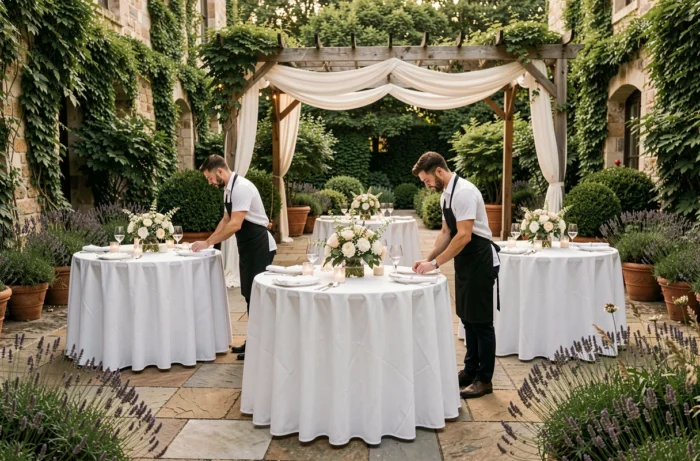
Wedding day schedule: build in buffers instead of packing the timeline
Minute-by-minute schedules create the illusion of control. In practice, the first delay (hair and makeup running over, a guest stuck in traffic, cocktail hour going on too long) can bring everything else tumbling down like dominoes.
A realistic schedule builds in buffers between each block of activities. Thirty minutes between the end of the ceremony and the start of the cocktail hour. Fifteen minutes between the cocktail hour and entering the reception room. These buffers aren’t wasted time: they’re when guests chat, the photographer captures candid moments, and the couple gets a chance to breathe.
The most common mistake is still underestimating how long group photos take. With a list of combinations (immediate family, extended family, wedding party, childhood friends), allowing at least forty-five minutes for group photos helps you avoid rushing through them or delaying the meal.
One last thing couples often forget: schedule time to eat. When you’re moving from welcoming guests to photos, speeches, and the first dance, it’s easy for the couple not to touch their food. Setting aside twenty minutes to sit down and eat, even briefly, makes a difference to the rest of the evening.