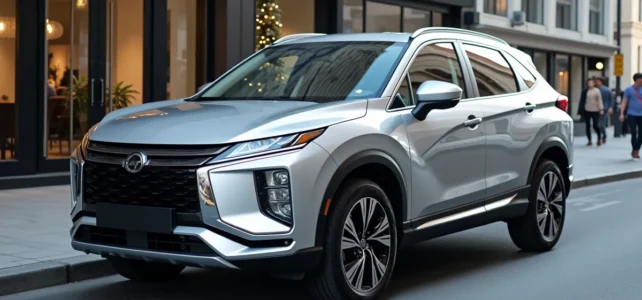
In May 2026, nearly one in three new cars registered in France is 100% electric. This shift in the distribution of powertrains is reshaping the French automotive market, from public subsidies to manufacturers’ strategies. The auto sector is undergoing a technical and regulatory transformation whose effects are now measurable month by month.
French automotive market: the electric shift of 2026
The notable event of spring 2026 is the rapid decline in gasoline car sales over the year. Traditional thermal powertrains are losing ground to electrified vehicles, and this phenomenon has accelerated since the beginning of the year.
You may also like : Everything You Need to Know About Real Estate News, Tips, and Trends
This threshold of one new registration in three being 100% electric was anticipated, but not so soon. It reflects a change in purchasing behavior that goes beyond just ecological concerns: cost per kilometer, reduced maintenance costs, and the growing network of charging stations weigh heavily in the decision.
To keep track of these developments week by week, auto news on Sarkostique provides analyses and insights on industry trends.
Further reading : Everything You Need to Know About the Stock Market: Tips and News for Better Investing
The growth of electric vehicles is not uniform. City cars and compact sedans are driving demand, supported by prices that are approaching those of equivalent thermal models. Electric SUVs, despite their popularity, remain positioned in higher price ranges.

Ecological bonus 2026 and CEE bonus: what changes for buyers
The regulation of subsidies for purchasing electric vehicles has significantly evolved in 2026. The enhanced ecological bonus of up to 5,700 euros for certain households is the most visible change. This revaluation targets low-income households, in a logic of social accessibility to the energy transition.
At the same time, the CEE bonus “boost for electric passenger vehicles” was revised on June 1, 2026. The changes focus on several areas:
- A targeted increase in the amount for low-income households, who can now combine this bonus with the ecological bonus to significantly reduce their out-of-pocket expenses
- An expansion of the scheme to professionals, opening the door for artisans and small businesses wishing to electrify their utility fleet
- Recalibrated income and vehicle type conditions to avoid windfall effects on high-end models
The interplay between these two schemes remains complex. A buyer eligible for both aids must check income ceilings, the environmental score of the vehicle, and the minimum holding conditions before resale.
Concrete impact on the price of an electric city car
For a low-income household, the combination of the bonus and the CEE bonus can represent a reduction of several thousand euros on a new electric city car. This level of aid brings the acquisition cost of an electric vehicle closer to that of a comparable gasoline city car, or even makes it lower for some entry-level models.
Electric used cars: a rapidly structuring market
The used car market is also experiencing its electric transformation, but with its own dynamics. The supply of used electric vehicles is mechanically increasing as the first models sold in volume reach the end of their first ownership cycle.
The central question for used car buyers concerns the battery. Its residual capacity determines the actual range of the vehicle and, by extension, its resale value. Unlike a thermal engine, whose wear can be diagnosed by mileage and maintenance history, the health of a battery requires a specific diagnosis that not all garages yet offer.
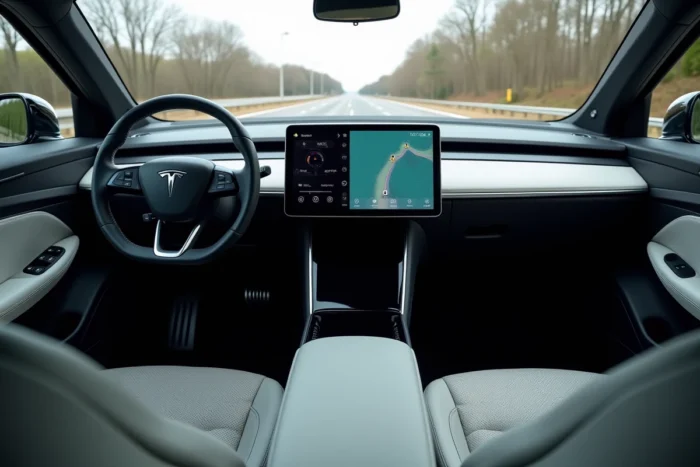
Several points of caution are necessary for purchasing a used electric vehicle:
- Request the battery capacity certificate (or SOH, State of Health), which indicates the percentage of remaining capacity compared to new
- Check whether the battery is owned or leased, as some older models still operate on a leasing scheme that impacts the monthly cost
- Consult the charging history: very frequent fast charges accelerate the degradation of lithium-ion cells
The electric used car market still lacks a stabilized price reference. Depreciation varies greatly depending on the brand, model year, and especially the remaining battery capacity, making comparisons between listings difficult without technical expertise.
European manufacturers facing Chinese brands: price repositioning
The massive arrival of Chinese manufacturers in the European market has triggered a chain reaction. Brands like Zeekr, BYD, or MG offer electric models at significantly lower prices than those of historic European manufacturers, with comparable equipment levels.
The response from European manufacturers involves several levers. Some, like Opel, are announcing more aggressive pricing policies with electric models around 25,000 euros. Others are betting on upgrading and differentiation through connected services or perceived quality.
Morocco illustrates another aspect of this reconfiguration: Chinese suppliers are increasingly present there, attracted by the industrial ecosystem developed around the Renault factory in Tangier. The kingdom serves as both a production base for the local market and a springboard to Europe, with the establishment of electric battery supply chains as a national priority.
This competitive pressure has a direct positive effect for buyers: the prices of new electric vehicles are falling faster than expected, and standard equipment is being enhanced to justify the remaining price gaps. The price war among manufacturers is accelerating the democratization of electric vehicles more effectively than public incentives alone.
The automotive market of 2026 can thus be understood through three simultaneous lenses: the shift in powertrains in sales figures, the continuous adjustment of public aids, and the industrial reconfiguration under competitive pressure. These three dynamics converge towards the same result, a much faster electrification of the French vehicle fleet than the projections made just two years ago.