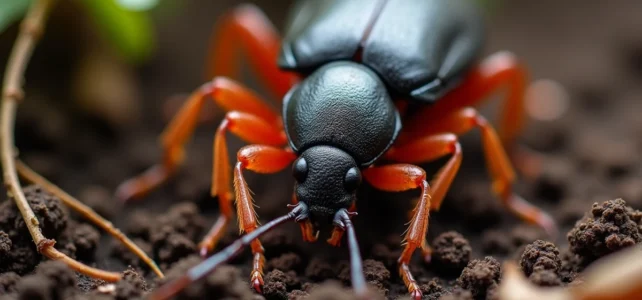
Pseudoophonus rufipes, also referred to by the synonym Harpalus rufipes, is a beetle from the Carabidae family, not a cockroach. Any strategy based on a cockroach control protocol (boric acid bait gel, pheromone traps for German cockroaches) is therefore ineffective. We start here from the actual biology of this harpalus to propose suitable management levers, both in the house and in the garden.
Functional biology of Pseudoophonus rufipes and management implications
The adult measures about 15 mm. The body is brownish-black, the elytra are pubescent with a characteristic golden sheen, and the tops of the tarsi are distinctly hairy. These morphological criteria are sufficient to distinguish it from an oriental or German cockroach, whose flattened body and long, threadlike antennae leave no doubt once you know what to observe.
You may also like : How to Successfully Design Your Green Spaces for a Harmonious Garden
The species is granivorous and partially omnivorous. On strawberry plants, the adult tears off the achenes and can cut through the fruit’s epidermis, causing rapid rot. In the garden, this diet also makes it useful: it consumes seeds of weeds, making it a potential ally in the fight against unwanted plants.
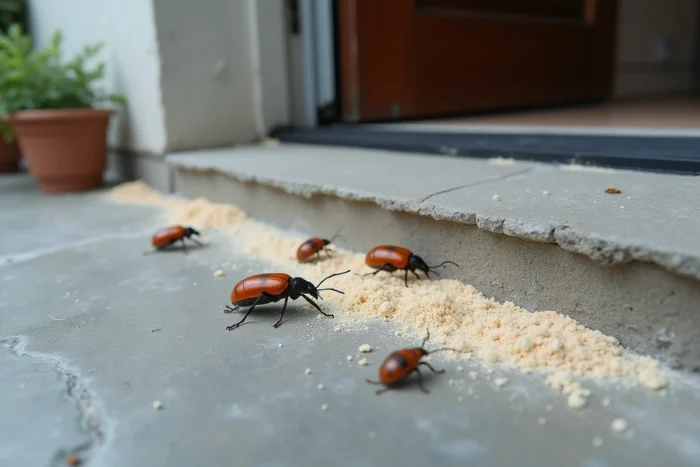
Every summer, we observe a peak of entries into homes, attracted by light sources. This light-seeking behavior explains the massive reports between June and September. Understanding this attraction mechanism is key to eliminating pseudoophonus rufipes in the house without resorting to inappropriate biocides.
Read also : Learn how to make homemade garlic purée to naturally protect your garden
The larva, with a short and poorly sclerotized body, lives in the soil. It has short legs equipped with spines and two unequal claws. The larval stages develop in the top few centimeters of soil, making them vulnerable to superficial soil work but also to natural soil predators (rove beetles, larger carabids).
Management protocol in the garden and vegetable patch
No approved insecticide specifically targets P. rufipes for amateur use. Broad-spectrum treatments against soil beetles (deltamethrin, lambda-cyhalothrin) simultaneously destroy the auxiliary fauna of Carabidae, which is a major lever for regulating slugs and weed seeds. We do not recommend this approach.
Reducing ground populations
The main lever is cultural. P. rufipes lays eggs in the upper layers of the soil, and the larvae remain there during their development. A light superficial tilling of the soil at the end of summer (light scratching of the top five centimeters) exposes the larvae to predators and desiccation.
- Remove daytime shelters around sensitive crops: boards laid on the ground, thick and damp mulches in direct contact with strawberry plants, piles of stones that haven’t been moved for several seasons.
- Maintain a low grass cover on the edges of the vegetable patch to limit the density of seeds in the soil, which is the main food resource for the adult.
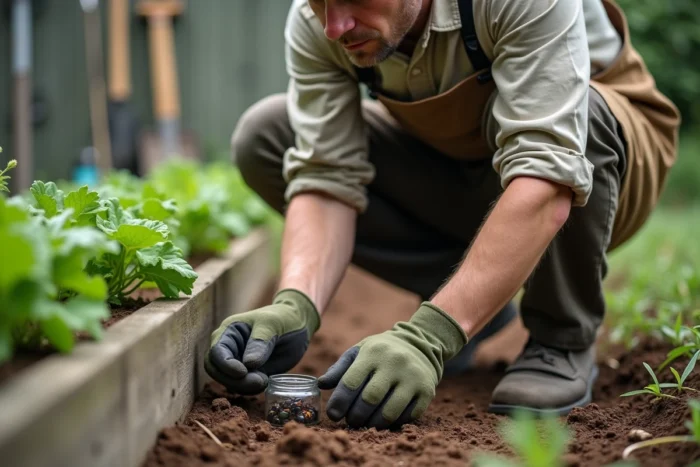
- Set up “Barber pot” traps (cups buried flush with the ground) around the edges of the strawberry beds to assess the actual pressure before any intervention. This drop trapping method is the reference in entomology for monitoring Carabidae.
Protecting strawberry plants
Damage to strawberries is the only reason that justifies targeted intervention. The harpalus attacks the achenes at night, and affected fruits rot within a few days. Mulching with a dry and less attractive material (wheat straw rather than wet grass clippings) reduces nocturnal activity around the fruits. Raising strawberries on plastic supports also limits direct contact with the soil.
Preventing invasion in the house during summer
Summer intrusions do not indicate an infestation in the sanitary sense. P. rufipes does not reproduce indoors, does not contaminate food like cockroaches do, and poses no risk to human health. The insect only enters through positive phototropism, attracted by indoor lighting visible from the garden.
Lighting management
Replacing outdoor white bulbs (rich in UV and blue spectrum) with yellow or orange LED bulbs with a warm spectrum significantly reduces the attraction of nocturnal beetles. Closing shutters or installing screens on illuminated windows in the evening remains the most reliable physical barrier.
Sealing openings
- Check the door bottom seals (thresholds with brushes or lip seals) on accesses leading to the garden.
- Seal cable and plumbing passages through exterior walls with expanding foam or silicone sealant.
- Inspect low ventilation grilles: a mesh smaller than 3 mm prevents adult passage while maintaining airflow.
In case of a sporadic entry, we recommend manual capture or vacuuming. The insect is harmless, does not bite, and does not emit any notable defensive odor unlike some other Carabidae.
Confusion between ophone and cockroach: why the diagnosis changes everything
The most common reflex when facing P. rufipes is to call a pest control professional for a cockroach treatment. Insecticide gels based on fipronil or imidacloprid, designed for Blattodea, have no demonstrated effectiveness on Carabidae. The feeding mode differs, the life cycle is different, and the insect does not colonize indoors.
The visual distinction can be made in a few seconds. P. rufipes has hard elytra, a rounded and compact body, and reddish legs. German or oriental cockroaches have a dorsoventrally flattened body, long and thin antennae, and flee from light instead of being attracted to it.
A correct diagnosis avoids unnecessary spending on a chemical treatment unrelated to the present species and preserves the auxiliary fauna of the garden that actively contributes to regulating other pests.