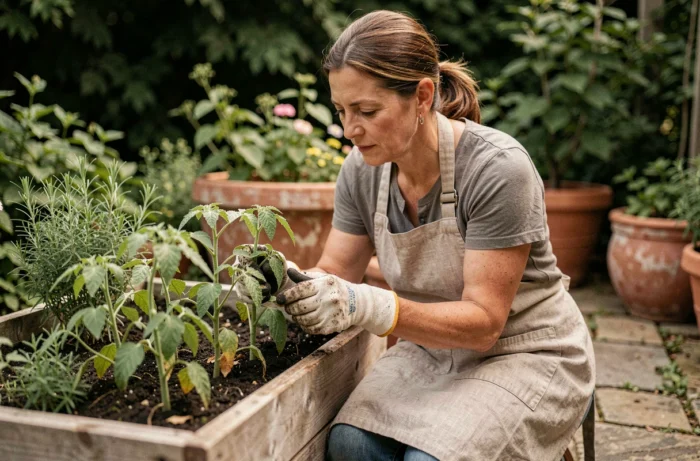
Gardening holds a stable place in the daily lives of the French: the vast majority of people with outdoor space continue to cultivate, plant, or maintain. But behind this consistency, habits change quickly. Purchasing channels are redistributing, practices are evolving towards more sustainability, and certain European regulations are directly altering what is found on the shelves. Keeping track of these movements allows for adapting your garden without wasting time or money.
Sustainability in the garden: when gardening no longer means buying
Have you noticed that your neighbor saves their seeds from one year to the next instead of buying new packets? This reflex illustrates a measurable phenomenon. In 2025, the practice of gardening remains widespread but purchases are significantly declining: only 68% of gardeners bought at least one product, compared to 76% the previous year.
This dissociation between practice and consumption reflects several concrete behaviors. The reuse of pots, stakes, and tools is increasing. The self-production of plants from cuttings or home sowing is becoming more common. Plant swaps between neighbors or through local groups are replacing some visits to garden centers.
To keep up with these changes and adapt your cultivation choices, the news from Conseil Jardin helps quickly identify what changes from season to season. The underlying trend is clear: we garden just as much, but we consume less and better.
Decline of garden centers and new distribution channels
The commercial landscape of gardening is undergoing profound transformation. Physical garden centers, long dominant, are seeing their market share erode. In 2024, around 1,580 points of sale shared approximately 3.1 billion euros in revenue, with a decline of over 4% since 2022.
Why this shift? Several channels are gaining ground:
- DIY stores are expanding their plant sections and offering ranges of potting soil, seeds, and tools at competitive prices.
- Specialized e-commerce (online nurseries, seed sales platforms) offers a wider catalog than the local store, with detailed variety sheets.
- Short circuits, farmers’ markets, and direct sales from local nurseries attract gardeners concerned about traceability and adaptation to the local environment.
The overall gardening market in France remains close to 8.5 billion euros. Garden centers now capture only about 40% of this total. For the gardener, this restructuring means more choices, but also the need to compare sources before buying.
Restrictions on pesticides in Europe: what changes in the vegetable garden
European regulations on plant protection products are evolving rapidly, and they directly affect amateur gardeners. Several active substances used in common fungicides and insecticides are undergoing withdrawal or restriction procedures at the European Union level.
A recent example in the Netherlands illustrates this dynamic: the Dutch courts have requested the ban of a fungicide identified as an endocrine disruptor. This type of decision, when validated at the European level, leads to the withdrawal of the affected products in all member countries, including France.
Concrete consequences for amateur gardening
In the vegetable garden, this particularly concerns the fight against blight on tomatoes and potatoes. The chemical treatments once available in garden centers are gradually disappearing. One must then turn to alternatives: plant extracts, plant associations, and the choice of resistant varieties.
Monitoring the withdrawal of active substances prevents stocking products that will soon be banned. Several institutional websites publish lists of molecules under reevaluation. Anticipating these changes allows for testing replacement methods before being forced to do so.
Adapting your garden to recurring drought episodes
Dry summers are no longer exceptions. The European horticultural sector is under increasing pressure during the summer months, and private gardeners are facing the same reality: water is scarce, lawns are yellowing, and some perennials are not surviving.
Rather than fighting against the climate, several approaches are gaining traction in French gardens.
Plants and soil: two levers to combine
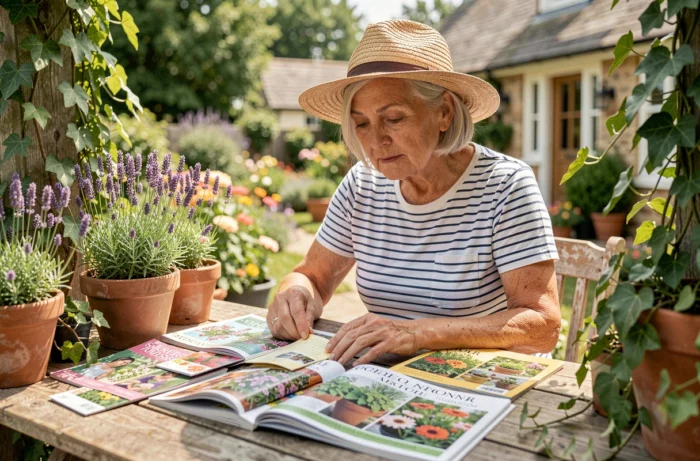
The first lever concerns the choice of plants. Mediterranean species (lavender, rosemary, santolina) or ornamental grasses can withstand weeks without watering once established. In the vegetable garden, old and local varieties often resist drought better than hybrids selected for yield under irrigated conditions.
The second lever, less visible, acts on the soil. A thick mulch (dead leaves, branch chippings, straw) dramatically reduces evaporation. Working the soil deeply in the fall, without turning it, promotes the infiltration of rainwater to the roots.
- Mulch all bare surfaces with at least five centimeters of organic material starting in spring.
- Install rainwater collectors to cover summer watering needs without relying on the mains.
- Group water-hungry plants in one area to concentrate watering efforts.
Rethinking the lawn
The classic lawn, made of ryegrass, requires a lot of water to stay green in summer. Allowing part of the grass to grow into a flowering meadow reduces watering and provides habitat for pollinators. A lawn that yellows in August is not dead: it goes dormant and greens up with the first autumn rains.
The gardening world is moving on several simultaneous fronts: sustainability in purchases, redistribution of sales channels, tightening regulations on pesticides, adaptation to water scarcity. Each of these movements concretely alters what you plant, where you buy, and how you maintain your garden. Keeping an eye on these topics, season after season, remains the best way to make the right choices at the right time.