Returning a Pull and Bear sweatshirt and reading the label reveals a succession of countries that alone outlines the map of globalized textiles. Bangladesh, Turkey, China, Pakistan, Morocco: the list varies from one item to another, sometimes even from one size to another within the same collection. Understanding where these clothes actually come from requires going beyond the simple “Made in” to see how the Inditex group organizes its production on a global scale.
Textile Clusters and Pull and Bear Manufacturing Provinces
We often talk about “made in China” as if the entire country were a single workshop. The reality is more nuanced. For Pull and Bear, Chinese production is concentrated in the provinces of Zhejiang, Jiangsu, and Fujian, three areas where supply chains are integrated from fabric to finishing. This choice is not random: these regions have infrastructures capable of quickly reproducing a trendy model in large volumes, exactly what the brand’s fast fashion pace demands.
Related reading : How to Effectively Eliminate Pseudoophonus Rufipes from Your Home and Garden
In Pakistan, it is Punjab that takes the lead, particularly for cotton pieces and basics. Turkey is involved in short-cycle productions due to its geographical proximity to Spain, which allows for reduced delivery times to European stores. Morocco plays a similar role for certain seasonal lines.
When consulting a review of the Pull and Bear brand detailing its manufacturing locations, this distribution between Asia, the Maghreb, and the European fringe is consistently found. Bangladesh and Vietnam complete the setup for the largest volumes, especially in denim and men’s basic pieces.
Related reading : Treadmill Slipping: Tips and Solutions to Prevent Skidding
Why Pull and Bear Manufactures So Little in Europe
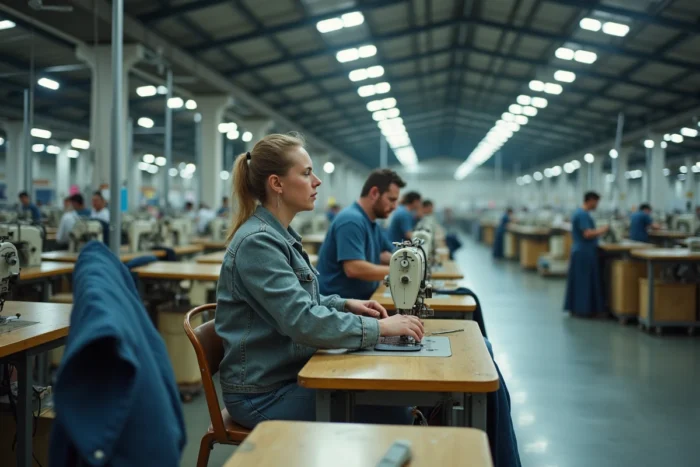
Spain and Portugal sometimes appear on the labels, but they represent a limited share of total production. One might expect that a Spanish brand from the Inditex group, headquartered in Arteijo near La Coruña, would favor local manufacturing. In practice, the logic of low prices drives production to countries with lower labor costs.
The Inditex model operates on two speeds. Highly reactive pieces (capsule collections, quick restocks) can be produced nearby, between the Iberian Peninsula and Turkey. Standard volumes go to Asia, where unit costs drop significantly for series of several tens of thousands of pieces.
This organization explains why the same t-shirt can display “Made in Bangladesh” one season and “Made in Turkey” the next. The place of manufacture depends on the production schedule and the type of garment, not on a fixed geographical anchor.
Inditex’s Ethical Commitments and the Reality of Supplier Audits
Pull and Bear communicates about its sustainability efforts through Inditex’s overall framework. The group publishes lists of suppliers and showcases audit programs. On the ground, feedback varies on this point: NGOs specializing in textiles regularly highlight the gap between the displayed charters and the actual conditions in some subcontracting workshops.
What can be concretely verified:
- Inditex publishes a list of its first-tier suppliers, which allows for the identification of main factories but not always cascading subcontractors
- The brand has gradually integrated certified materials (organic cotton, recycled polyester) into certain lines, although the exact proportion remains difficult to assess for Pull and Bear alone
- Social audits exist, but their frequency and depth vary by production country, with Turkey and Morocco generally better covered than Bangladesh or Pakistan
Greenwashing remains a recurring criticism directed at the entire fast fashion sector, and Pull and Bear is no exception. Communication efforts on responsible fashion coexist with a business model based on the constant renewal of collections, twice a week in stores according to the brand itself.
What the Pull and Bear Label Doesn’t Say About Quality
The country of manufacture does not solely determine the quality of a garment. A pair of jeans sewn in Portugal is not automatically better than a pair sewn in Turkey. What matters is the specifications imposed by the brand on its suppliers: fabric weight, seam strength, color retention after washing.
At Pull and Bear, the low pricing strategy involves trade-offs on raw materials. Most basics contain cotton blended with polyester, which reduces cost but also the garment’s durability. Pieces made from faux leather or synthetic materials constitute a growing part of the catalog, particularly in jackets and accessories.
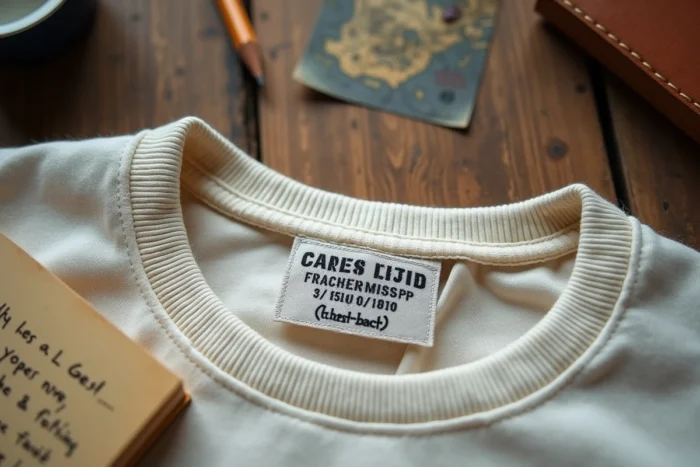
For a reasoned purchase, it’s better to look at the composition indicated on the label rather than the country of origin. A basic made of predominantly cotton produced in Bangladesh may last longer than a synthetic blend item sewn in Portugal.
- Check the percentage of natural fibers in the composition
- Prefer dense weights for t-shirts and sweatshirts
- Compare finishes (double seams, reinforced hems) between two similar pieces
Pull and Bear remains a fast fashion brand with the compromises that this entails: accessible prices, rapid trends, limited lifespan. Knowing where the clothes come from at least helps situate what one is buying within a global production chain, without illusions about artisanal craftsmanship that has never been the brand’s promise.